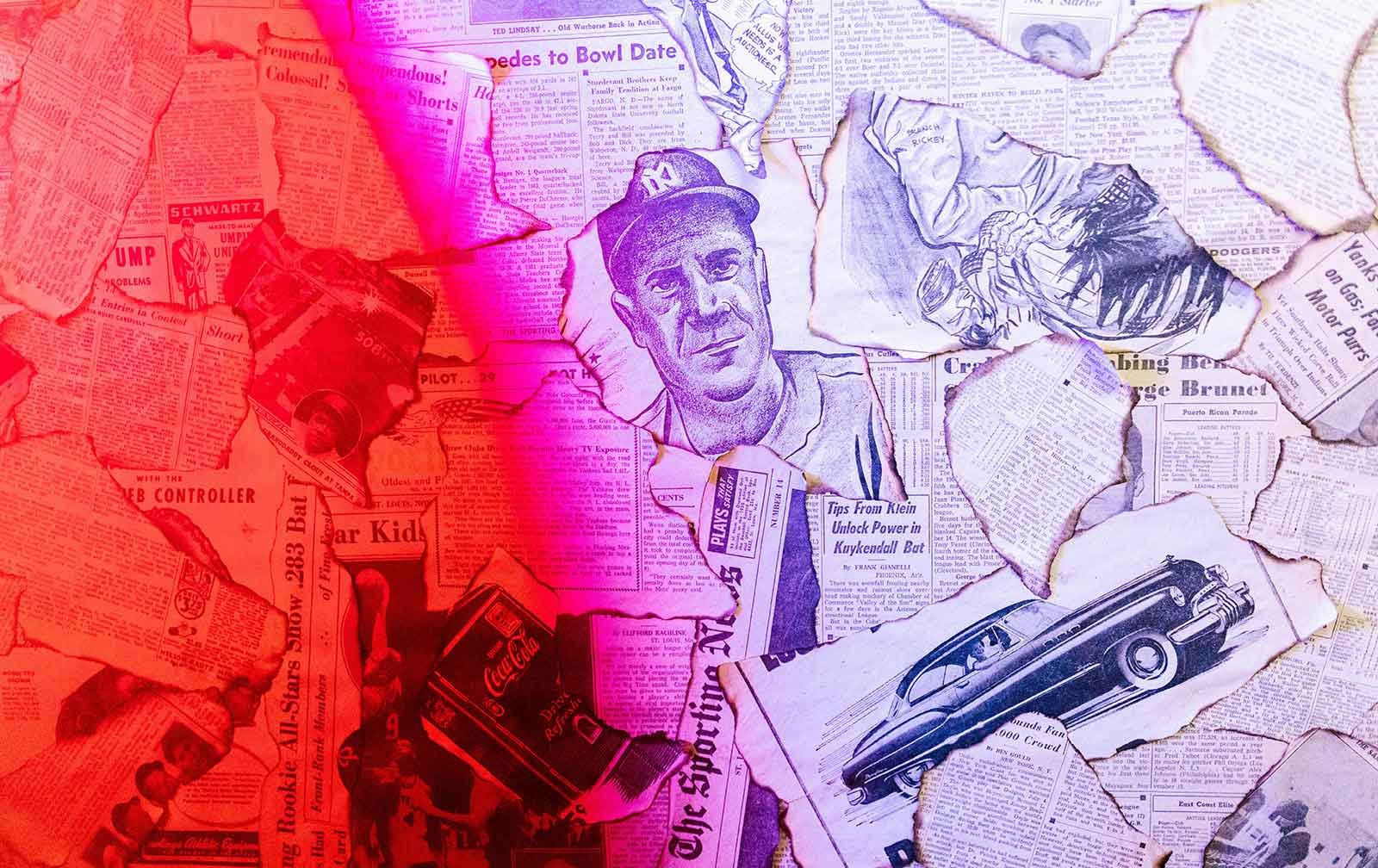
Algorithms dictate attention spans while print material like magazines and newspapers gather dust. But, is it so? Let’s find out!
Like many of us, who are hooked onto our phones for the major part of the day, flipping through a magazine may seem like an archaic idea. When was the last time you did it? If you are lost in thought, it’s probably a good time to browse this blog to see where the chips have fallen! For us, too, as an advertising agency, this question begs a deep dive to understand how the landscape of advertising has changed.
Digital dominance has reshaped the world of communications, and it is safe to say its grip will only grow stronger in the years ahead. The ability to gauge sentiment, draft campaigns, select from a vast array of tools, and receive real-time feedback, all within a matter of hours, has made digital the obvious choice for brands. Fast, flexible, and endlessly adaptable, digital is simply irresistible. It offers marketers the thrill of immediacy, the comfort of data-driven decisions, and the power to pivot at lightning speed.
 But what does this mean for print media? Once the undisputed king of advertising, print now finds itself in a world where attention is fragmented and pixels dominate. Yet to dismiss it as obsolete would be short-sighted. Print carries qualities that digital cannot replicate: tangibility, permanence, and prestige. A magazine spread or a finely crafted brochure lingers in the hand, engages the senses, and signals credibility in ways a fleeting banner ad never could. In fact, in a landscape saturated with digital noise, print’s scarcity has become its strength, a medium that feels intentional, curated, and rare.
Print is very much alive. In fact, it has gained renewed prominence. Why? Because for us Indians, print has always been woven into the blueprint of daily life. Our mornings feel incomplete without a steaming cup of chai and a flip through the newspaper. This ritual cuts across boundaries; from the thelawala to the office-goer, making it an inseparable part of our Indianness. A complete wipe-out of print is, therefore, impossible.
At the other end of the spectrum, fortnightly and monthly publications continue to hold their charm. In today’s world, where tactile experiences are increasingly valued, the act of turning the pages of a magazine feels luxurious, deliberate, and deeply satisfying. Print is everything you can touch, feel, and interact with, a sensory medium that keeps its relevance intact despite the explosion of digital alternatives.
Iconic magazines from the great houses of print like Vogue, Architectural Digest, The Times, and more still command cult followings. What’s remarkable is that their readership is not only enduring but also expanding, with younger audiences embracing them worldwide. This proves that print is not a relic of the past, but a medium evolving into a symbol of prestige, permanence, and delight. Print is here to stay.
As an advertising agency, we are constantly comparing, analysing and learning, so we thought this would be the perfect time to do an apples-to-apples comparison to see how digital and print collaterals compare.
But what does this mean for print media? Once the undisputed king of advertising, print now finds itself in a world where attention is fragmented and pixels dominate. Yet to dismiss it as obsolete would be short-sighted. Print carries qualities that digital cannot replicate: tangibility, permanence, and prestige. A magazine spread or a finely crafted brochure lingers in the hand, engages the senses, and signals credibility in ways a fleeting banner ad never could. In fact, in a landscape saturated with digital noise, print’s scarcity has become its strength, a medium that feels intentional, curated, and rare.
Print is very much alive. In fact, it has gained renewed prominence. Why? Because for us Indians, print has always been woven into the blueprint of daily life. Our mornings feel incomplete without a steaming cup of chai and a flip through the newspaper. This ritual cuts across boundaries; from the thelawala to the office-goer, making it an inseparable part of our Indianness. A complete wipe-out of print is, therefore, impossible.
At the other end of the spectrum, fortnightly and monthly publications continue to hold their charm. In today’s world, where tactile experiences are increasingly valued, the act of turning the pages of a magazine feels luxurious, deliberate, and deeply satisfying. Print is everything you can touch, feel, and interact with, a sensory medium that keeps its relevance intact despite the explosion of digital alternatives.
Iconic magazines from the great houses of print like Vogue, Architectural Digest, The Times, and more still command cult followings. What’s remarkable is that their readership is not only enduring but also expanding, with younger audiences embracing them worldwide. This proves that print is not a relic of the past, but a medium evolving into a symbol of prestige, permanence, and delight. Print is here to stay.
As an advertising agency, we are constantly comparing, analysing and learning, so we thought this would be the perfect time to do an apples-to-apples comparison to see how digital and print collaterals compare.
| Why Digital | Why Print |
|---|---|
| Fast, flexible, and cost‑efficient. | Tangible, sensory engagement. |
| Hyper‑targeted campaigns via algorithms. | Prestige and credibility, especially in luxury markets. |
| Real‑time analytics and measurable ROI. | Scarcity makes print feel intentional and rare. |
| Instant updates and scalability. | Deeper reader attention. |
 Together, they form a complementary ecosystem. Print delivers permanence and sensory engagement; digital delivers immediacy and reach. The real power lies in maximizing both with intent, creating campaigns that resonate across touchpoints and audiences.
Conclusion:
So, has the ink dried up? We say, hardly. It has simply shifted roles to navigate a different kind of world, one that still craves it.